According to HUD and the U.S. Census Bureau, in recent years home owner do-it-yourself (DIY) projects accounted for 37 percent of all home remodeling projects performed nationwide. The growing popularity of cable television channels with programming dedicated to home improvement including HGTV and the DIY Network, as well as the financial pressure of the economic downturn, may be inspiring home owners to take on home fixes and decorating challenges on their own.
However, it is important that home owners consider the safety risks, time delays and hidden costs before attempting DIY home improvements. Remodeling industry professionals report that about 30 percent of their work comes from fixing DIY debacles.
January 1 is just around the corner and millions of Americans are once again thinking about the resolutions they will make for the New Year. Why not make this year’s resolution one that will last long into the future — long after you’ve stop bothering to set the alarm an hour early to go for a run. Deciding to become a home owner is possibly the best resolution you can make.
According to a 2012 nationwide poll, 96 percent of home owners are happy with their decision to own, and 74 percent say that owning a home is the best long-term investment they can make.
Here are some tips to help you make good decisions for your homeownership resolution.
First, figure out how much you can afford. This depends on factors including your credit rating, your current expenses, cost of a down payment, and interest rates. Don’t forget that you will need a down payment up front and money to make monthly mortgage payments.
“I have to comment on everyone’s integrity. Everyone has been of the highest caliber and truly made us feel like they care about us as people, our satisfaction and that we are getting a home, not just a house. I rate every aspect of this process, every member of this team and every subcontractor, an A plus!” Bonnie Holstein
Today’s home owners and buyers are looking for ways to incorporate home technologies that increase the long-term value of their house but also provide convenience, safety and comfort. Energy management is a highly-desired feature in both newly-built and existing homes, along with multi-zone heating, ventilation and air-conditioning (HVAC) systems and lighting controls. Not only are these features easy-to-use, but they also provide energy-efficiency.
By incorporating the following technologies, home owners can save money on their utility bills:
Automated HVAC systems can maintain a more energy-efficient temperature while the home owners are away at work, but switch to a more comfortable temperature prior to their arrival home. Zones can also be created to heat or cool only the areas most used by the occupants, keeping other areas, such as guest bedrooms, shut down until they are needed. They also can combat the problem of heat rising, keeping upper floors cooler in the summer without freezing the lower floors in a home. According to Energy Star, a joint program of the U.S. Environmental Protection Agency and the U.S. Department of Energy, programmable thermostats can save consumers about $180 per year in energy costs.
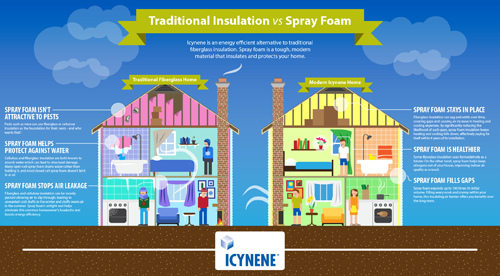
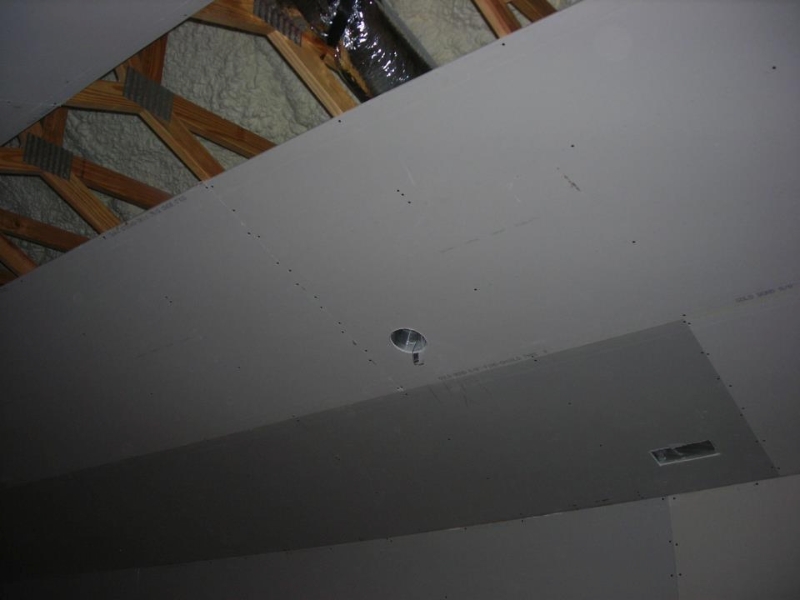
Living Stone Construction understand the importance of using “spray foam” to insulate every home we build for many reasons, the most important being the energy efficiency Spray foam insulation offers numerous benefits that traditional cellulose or fiberglass insulation fail to provide. Here are a few of the reasons why this kind of insulation is an ideal, energy-efficient alternative to its counterparts.
Spray foam insulation fills gaps
Spray foam insulation expands up to 100 times its volume when it is applied to surfaces, filling gaps that might otherwise cause air leakage. Meanwhile, cellulose and fiberglass can be loosely packed, which can result in drafty spots or stuffy areas in a building.
Spray foam insulation is healthier
Spray foam insulation is eco-friendly and helps keep allergens and pollutants outside of homes and businesses. Read More
We are so appreciative that Living Stone reached out to your clients and friends to offer restoration services to our WNC communities impacted by Hurricane Helene.
We wanted to take this opportunity to let you know how grateful we are that we chose Living Stone to help us restore our Black Mountain townhome. We couldn’t be happier with the process and progress thus far, from our initial meeting with Mike to see what repairs were needed… to our call with Justin for an estimate of the work… to our conversation with Alfred to review the comprehensive estimate… to our initial meeting with Chuck and everything he has done since to move things along flawlessly with our restoration… to our beautiful fireplace surround and mantle that Michael Blackstone built.
We feel blessed that Chuck was assigned as our project manager, as we have had a great collaboration with him. His demeanor is personable, but straight forward. He is extremely accessible, either onsite or via text/phone to provide scheduling updates, answer our questions, offer suggestions, provide feedback on design selections, and discuss next steps. He made a great suggestion to reclaim the unused space under our stairs as storage space. Chuck is also very proactive, quietly working behind the scenes to make things happen seamlessly. He is committed to providing us with a high-quality restoration project while keeping our budget in mind.
We already knew that Living Stone has an excellent reputation as a builder, but we are equally impressed by how much you give back to the community. That’s a large part of the reason we selected you to help us with our restoration. You have definitely exceeded our expectations thus far, and we know we will be very happy with our home once the restoration is complete. Although there is still work to do, we wanted to give you some preliminary feedback on how pleased we are to be working with Chuck and the entire Living Stone team.
We are delighted to call ourselves Living Stone customers!
We are thrilled with our green built home designed and built especially for us by Living Stone Construction. The care they took in choosing materials and using sustainable building practices are allowing us to enjoy excellent air quality inside our home while we realize amazing savings on our energy bills.
Living Stone Construction, and ID.ology Interior Design, were a pleasure to work with throughout all facets of our project. They were integral during our design stage and handled our fast-track schedule like true professionals. It is so rare to work with people who don’t make excuses or point fingers – Living Stone Construction and ID.ology are comprised of those rare people.
This house is absolutely amazing. It is everything I ever wanted in a home. I have not found one flaw in my house built by Living Stone; everything is done to perfection. Everything.
With Sean and Laura’s design-and-build business model, we knew exactly what was going on. It was helpful as far as keeping us on point for the amount we’d budgeted for each part of the house. It was very transparent and reasonable to me, more so than with other builders. We knew what we were getting.
To do a project this size over that amount of time and when you come to the end of it, you’re still friends – that says a lot about the builder. It says that they delivered what you expected.
Sean doesn’t want you to move in unless everything is absolutely perfect,” she said. “He just has to have everything perfect. And I like everything perfect as well. We were a match made in heaven.
Sean Sullivan and his group are the most professional and pleasant builders I have the had the pleasure of working with. They go to great lengths to determine what their customers want (and their budget requirements). Then they do everything possible to “under sell and over deliver”. Sean is an exceptional builder that delivers an exceptional home.
Over the last 10 years, time has not marked the home – nothing on the inside has needed re-staining, and nothing on the outside has needed re-painting. It’s been very minimal for the yearly things you would think you had to do. We don’t have a list of repair people because we haven’t needed them.
The building supervision was good. The communication was good. We didn’t have any problems with the billing. There really weren’t any surprises. It was really easy, which is almost unheard of in a construction situation.
He does things right for the sake of doing them right and that was the impression we got with every facet of our experience with Living Stone. That made us just be able to trust them and trust their system.
They have a process that is thoroughly thought out, thoroughly vetted and thoroughly effective. The process from start to finish was totally transparent and the bottom line was that it was a fun process and not a stressful process.
I was impressed with the emphasis on high quality construction, energy efficiency and an aging in place concept. If you choose LSC and ID.ology you’ll have the piece of mind that you’ve chosen the best.
Sean and Frank have done excellent work in the community and have a great reputation so there was no where else we would go but to them when it was time to build our new home.
I couldn’t be more pleased. Michael and I feel like we are on vacation, everytime we walk into the kitchen. Frank and all the crew has really made this project go smoothly, and I can’t thank Living Stone enough.
We chose Living Stone because of Sean but we love Living Stone because of their team. Molly, Pam, Frank, Laura and our main man Mike! Mike drives our home’s construction, can answer any question at a level you can understand and is a pleasure to work with. Laura organizes and improves all of our design decisions, gives us inspiration and keeps everything on track. Sean, it is a credit to you that you have surrounded yourself with so many truly good people.
I have to comment on everyone’s integrity. Everyone has been of the highest caliber and truly made us feel like they care about us as people, our satisfaction and that we are getting a home, not just a house. I rate every aspect of this process, every member of this team and every subcontractor, an A plus!
Design+build is an outstanding approach and the implementation of it was just amazing. We had very high expectations based on Sean’s reputation and what we had seen. And they were exceeded.
The process of design+build and creating something that is so energy efficient is a miracle to me. Sean has a way of putting things together so that we get the product that we want and then he puts together the quality product that he knows he can build.
I don’t know why someone would not choose Living Stone to build their home. It is such a polished production that gives you a polished complete finish. You have no doubt that the product you have is the house you dreamed of!
We built this home from a remote location so we had to put a lot of faith in Frank the Superintendent, Sean of Living Stone, and Laura the designer, to make sure they were building this home to our specifications and to meet our needs. Frankly I have to admit I was extremely impressed. I don’t think they missed anything and they exceeded our expectations.
It’s special, it’s wonderful and I keep pinching myself because I cannot believe that this is our home. Living Stone Construction, headed by Sean Sullivan more than met our expectations. They hit a grand slam out of the ball park. This house is amazing!
Design/Build is an outstanding approach and the implementation of it was just amazing. We had very high expectations based on Sean’s reputation and what we had seen…and they were exceeded.
Your integrity, skill, kindness and warmth shows in your words as well as your actions. We are and will forever be grateful to have worked with such an amazing group of people. Being part of the Living Stone family is our blessing. Thank you.
The energy efficiency of the house has made it very comfortable through some very extreme weather and our energy bills have been remarkably low. The energy star rating of the home has really paid off. Truly, I haven’t had energy costs this low in 20 years.
Sean has the rare quality of being able to see the big picture while being engaged in the fine details of his projects combined with the ability to effectively and efficiently communicate both in a way that not only gets the job done but gets it done with a commitment to excellence that has enabled him to be a leader among his building industry peers across North Carolina. I have known Sean for close to 10 years and have a great professional and personal admiration of his work and character.
Sean’s knowledge of building practices and principles, conceptually and practically, really impressed me. I eventually saw his work in person and was blown away by the craftsmanship. He is a TRUE craftsman — no cookie cutter work here. The houses he builds are incredible — the floorplans are well thought out, and the details are really special.
Sean is detailed, honest and conducts himself and his company with character and integrity. Fantastic and loyal employees. I’ve known and worked with Sean for over 7 years, highly recommend.
The Living Stone team are unmatched in what they do. We are so grateful to get to be part of their team and look forward to bigger and better things to come.
We have enjoyed our relationship with Sean and Living Stone Construction thru the years. They have an excellent eye for detail and are enjoyable to work with.
The Living Stone Construction Design/Build team, are the best in the area. I have been in, and around, the building and real estate industry throughout my life and I have never met a builder that has as much integrity, passion for what he does, care for his clients and the motivation to always exceed expectations, drive to continue learning and honing his skills and techniques to offer his clients the best. Anyone who hires Living Stone Construction will not be disappointed and will have the home of their dreams!
I have known Sean for many years and can say with out a doubt he has the highest degree of professionalism, attention to detail and desire to provide a spectacular customer service experience I have ever seen.
Sean has an extremely professional TEAM who supported my clients initially and now throughout the process. He builds trust and it is deserved — Sean has high standards for himself and that is obvious in how he does business.
I have built or renovated 5 homes and completed tens of millions of dollars of commercial construction. Sean is the most professional, knowledgeable, honest, organized residential builders it has been my pleasure to know. He recently completed our custom home in the Settings of Black Mountain and exceeded our expectations in every way. From his staff to his sub contractors, excellence is practiced every day.
From a professional standpoint Sean Sullivan with Living Stone Construction goes above and beyond to make sure his clients as well as the general public and colleagues are as educated as possible with building homes in the mountains.
Simply awesome company !!!! If your looking for the best, you need not look any further. Custom built quality homes and fantastic folks who care about you and your new home! Living Stone Construction you are the BEST!
Sean Sullivan’s team of builders are top notch. They converted a small residential building into a arts n crafts commercial masterpiece.. With over 2,000 sq ft of addition; everything looks as if it’s been here since day one. I highly recommend Sean and his team of experts.
The process of design/build and creating something that is so energy efficient is a miracle to me. Sean has a way of putting things together so that we get the product that we want and then he puts together the quality product that he knows he can build.
Sean is the most organized manager I have encountered. I would match his management skills against any of the Managing Directors of the Fortune 500 Company that I worked with in project management, financial planning, and negotiations. He expects and demands the best from his employees, as do Living Stone’s clients. He is a true leader. Pam Potter
From the beginning, Sean was a great listener, offered ideas and introduced us to his team. We have been extremely happy with everything that has been done so far. We anticipate the building phase with great joy! A top professional for sure.
Having worked together on an award winning home, I found Sean and his team to be attentive to the quality of construction, committed to incorporating sustainable building practices and materials, and thorough in tracking costs. He was very willing to work with my team during the construction process which provided the best level of service to our client. Sean is a builder that I recommend highly.
LSC was a pleasure to work with throughout our remodeling project. Frank worked diligently to meet our deadline for completion of late January, despite snow and ice. Their ability to deliver a quality product in a timely manner while still being able to adapt to unforeseen circumstances was greatly appreciated.
We love our home. In addition to building a quality home, Sean is honest, responsive, a pleasure to work with. He really makes the entire process flow quite comfortably. Living out of state when we had our home built was initially cause for some concern for us. Sean and the superintendent of our project were in constant communication with us, letting us know well in advance when decision points were approaching. And the weekly pictures were wonderful. I wouldn’t have been able to cope without them. Probably the best comment I could make is that if we were to build again, we’d use Sean again in a heartbeat
Sean Sullivan’s skills and experience exemplify superlative leadership in business and construction. His commitment to doing the right thing and being focused on the best interests of his customers is always clear. The consummate professional, Sean’s strong relationships with the many disciplines within the trade establish him as one the best go-to contractors in the business!
Living Stone did a fantastic job on our mountain house. They far exceeded our expectations and always kept us informed throughout the entire job. Their crew are real craftsmen- from carpenters to painters, they were professional in every way. If you want a beautiful and well-done job, these are the guys. We highly recommend them, so if you have bad experiences in the past, call Sean and deal with a real pro

 January 1 is just around the corner and millions of Americans are once again thinking about the resolutions they will make for the New Year. Why not make this year’s resolution one that will last long into the future — long after you’ve stop bothering to set the alarm an hour early to go for a run. Deciding to become a home owner is possibly the best resolution you can make.